
A race gives a training week its direction, but it does not give every session the same shape. Imagine one session built around strength sets, another around repeated efforts on the rower, and a third linking running with stations. They may be preparing the same athlete for the same start line, yet the pauses inside them serve different purposes.
That difference matters when considering palm cooling for HYROX. A pair of handles can only be part of the session when there is time to hold it. The useful question is therefore where it fits among the sessions that prepare someone for the event.
One event, different kinds of training
Consider a strength session in which each set is followed by a planned rest. The working block has a clear end, the weight is put down and the hands become available. Now consider a session that combines running and an exercise before a longer pause. In that arrangement, finishing the run does not necessarily mean the work is over. The rest may come only after the full block.
Both sessions can belong in the same preparation. They simply create different moments in which a handheld tool could be used. The distinction is easy to miss when equipment is described only as being for a sport: the label tells us who might be interested, but not what their next session will actually ask them to do.
For the person choosing equipment, looking at the training week is more useful than trying to make every session resemble the event. It reveals the ordinary pauses that are already part of the plan, rather than asking the athlete to create new ones.
A transition is not the same as a rest
Moving from one exercise to another can look like a break from the outside. Inside a training plan, it may still be part of the same continuous effort. A run followed immediately by a station is different from a run followed by a scheduled pause, even when both leave a short period without equipment in the hands.
That is why a question about using palm cooling “between stations” needs context. It could describe a genuine training rest, or it could describe movement within an unfinished block. This article is concerned with the first case: the opportunities already present in training. It does not establish what an event permits during competition.
The practical implication is to keep the purpose of the session intact. A tool should fit an existing rest rather than become a reason to stop a continuous exercise sequence. Where the plan provides no workable opportunity to hold the pair, that particular session may not be the place to use it.
Where palm cooling enters the picture
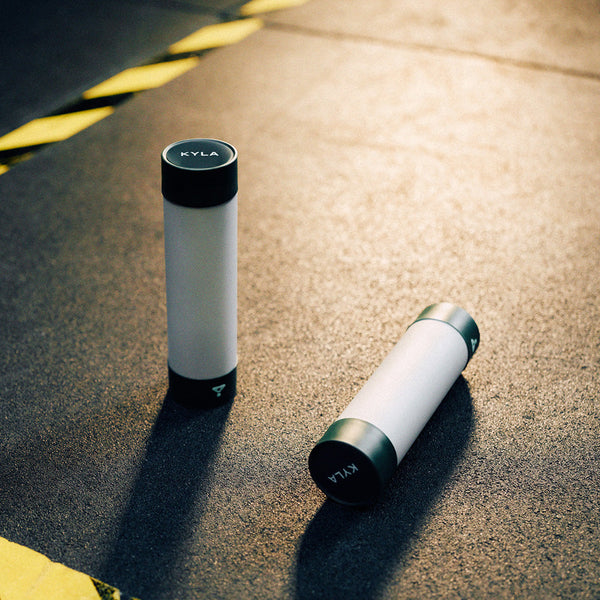
KYLA Performance™ is a pair of handles built to take heat out through the palms during the rest between efforts. In a session with repeated blocks and planned pauses, its place is therefore beside the point where those pauses happen, rather than somewhere the athlete has to leave the session to find.
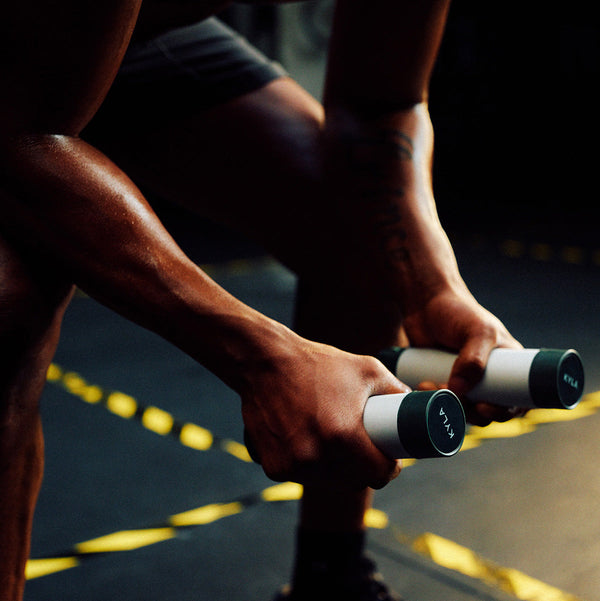
As an illustrative example, the pair could wait at the same rest point after each completed block of running and rowing. When the full block ends, the athlete can hold one handle in each bare palm during the break and put them down before returning to the work. The same principle can apply after a strength set. The detailed use instructions explain the routine; the training plan determines where the opportunity sits.
That arrangement explains how the tool can fit. It is not evidence that every such session will produce a performance gain. Practical use and performance evidence are different questions, which is why the published palm-cooling research should be read alongside, rather than substituted for, the specific training example.
A tool does not need to appear in every session to have a clear role in a training week. For someone preparing for HYROX, that role depends on how the work is organised. The sessions with accessible, planned rests are the place to consider palm cooling, without making the rest of the week conform to the equipment.