

If you have looked for a way to manage heat in training or competition, you have met two families of product: vests you wear, and things you hold. They get compared as if they were rivals. They are not. They do different jobs at different moments, and knowing which is which saves you money and, on a hot day, a result.
What a cooling vest does
A cooling vest holds cold against the torso: ice packs, frozen gel, or a phase-change material in pockets across the chest and back. It is worn before an effort, and in some sports during it. The evidence for vests is mostly about pre-cooling in heat: lower your body's heat before a long effort starts so that you have further to climb before heat limits you. The Bongers 2014 meta-analysis on pre-cooling found a modest but real benefit for endurance performance in hot conditions. (Pre-cooling before a race.)
The limits are physical. The torso is a large surface, but it is not a heat-release surface; the skin there has no special vessels for shedding heat, so a vest cools slowly and mostly the layer it touches. A vest weighs one to three kilograms. And you cannot wear it while you lift, run or play; in most sports it comes off at the start.
The exception is motorsport, where a driver sits in a sealed car at 50 °C or more for two hours with no rest at all, and a vest with circulating cold water is the only cooling available during the effort. That is a special case, and it is why drivers know more about heat than most athletes.
What palm cooling does
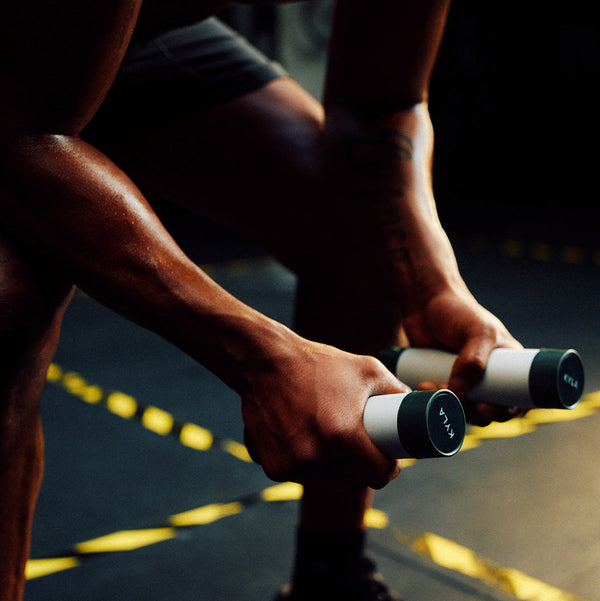
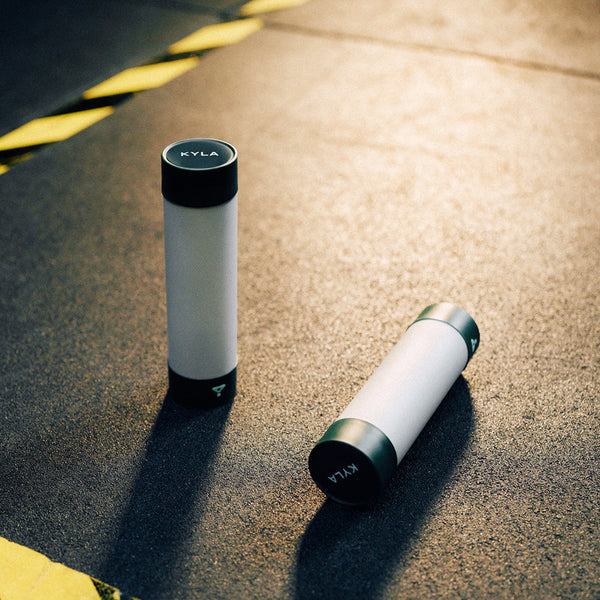
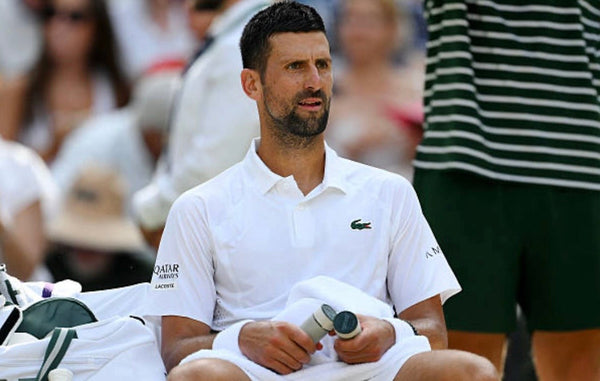
Palm cooling uses the hand as the exchanger. Under the hairless skin of the palm sit vessels that open when you are hot and route warm blood to the surface. A surface held there at around 14 °C takes heat out of that blood, and the blood carries the loss back to the core. It is fast, because that is what the palm is built for, and it works between efforts: at the changeover, between sets, in a transition, in the sixty to ninety seconds you already have with your hands free. It does nothing during the effort, because your hands are busy. (Three questions we get asked.)
A pair of handles weighs less than a vest and does not need to be worn. That is the practical difference for anyone who is not strapped into a car.
Which does what
Before a long effort in heat, with time to prepare: a vest, or a cold drink, or both. Pre-cooling is a real strategy and a vest is a fair way to do it.
Between efforts, in any climate: palm cooling. A vest cannot be put on and taken off between sets, and it would not do much in ninety seconds if it could. The hand can.
Right before the start, when the hands are free for a last minute: palm cooling. Whatever heat can be shed by hand before a long effort is shed then.
During a long effort with no rest in a sealed environment: a circulating vest, if the sport allows it. Nothing handheld helps a driver at 300 kilometres an hour.
After: neither, particularly. An ice bath is a different conversation, with a different purpose. (Ice bath vs palm cooling.)
What racing drivers do
Marcus Ericsson, who won the Indy 500 and drove five seasons in Formula 1, Dino Beganovic, and a number of Formula 1 drivers we do not name use KYLA Performance in the minutes before the start. A cockpit is one of the hottest places in sport, and once the lights go out there is no rest for two hours, so the only heat a driver can shed by hand is shed on the grid. Starting a little cooler, at every start, is an edge that a driver who overheats and makes a mistake would pay a lot for. (F1 and the one degree window.)
The point of looking at a driver is that he is the one athlete who uses both tools for what they are: the vest for the two hours he cannot rest, the handles for the minutes before them and the rests around practice, testing and the gym.
The honest summary
A vest is for before and, in a few sports, during. Palm cooling is for between, and for the last free minute before the start. If your sport has rests, palm cooling between sets is the tool that fits the rests, and it fits in your bag. If your sport has none, look at a vest and accept its weight.