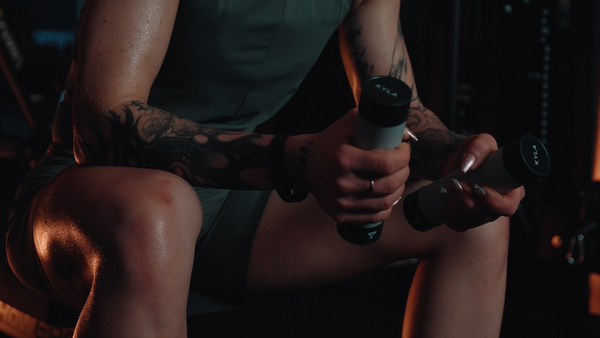


Modern athletes optimize almost everything.
- Sleep.
- Nutrition.
- Hydration.
- Heart rate.
- Recovery.
- Pacing.
- Blood glucose.
- Zone training.
- Supplements.
- Breathing protocols.
But one variable still receives surprisingly little attention during training itself, temperature. Not because it does not matter. Mostly because athletes have learned to treat heat as unavoidable. Something to tolerate. Something to push through. Something that simply comes with hard training.
The result is that thermal strain often becomes normalized instead of managed.
Heat affects performance long before collapse
Most athletes associate heat with extreme situations. Heat stroke, cramping, dangerous conditions, outdoor endurance races. But performance degradation from thermal strain begins much earlier than that.
As heat accumulates during repeated efforts, the body gradually reallocates resources toward thermoregulation. Cardiovascular strain rises, perceived effort increases, recovery between intervals becomes less effective, repeatability decreases.
The athlete often experiences this simply as "Everything suddenly feels harder." Not because fitness disappeared. Because physiological load changed.
We explored this broader mechanism further in our article on why performance drops before you feel tired.
Temperature became background noise
Part of the reason athletes overlook temperature is that heat accumulation rarely feels dramatic at first. It builds progressively.
One interval feels manageable. Then the next feels heavier. Then pacing changes. Then recovery shortens. Then output fades.
The process feels normal because it happens gradually. Most athletes interpret this as fatigue alone. In reality, thermal strain is often contributing underneath the surface. This becomes especially relevant in modern repeated-effort sports:
- HYROX
- CrossFit
- Functional fitness
- Combat sports
- Repeated sprint environments
- Strength circuits
These formats are built around accumulating physiological stress over time. The body never fully resets between rounds or intervals.
Training culture glorifies suffering
Another reason temperature is ignored is cultural. In many sports, visible exhaustion is associated with productive work. The harder the session feels, the more valuable it appears.
Athletes are praised for tolerating discomfort. Coaches are rewarded for intensity. Recovery inside training is often treated as passive downtime rather than performance infrastructure.
This creates a blind spot. Athletes become extremely sophisticated at managing nutrition, hydration, and pacing while still treating temperature as something external to performance itself. But thermoregulation directly influences output stability over time.
We explored this broader relationship further in our article on why temperature shapes performance.
The body is constantly regulating heat
One misconception around thermoregulation is that it only matters in extreme heat. Physiologically, the body regulates temperature continuously during exercise. Even indoors. Even during moderate conditions. Even during short sessions.
Muscular work generates heat constantly. The cardiovascular system then redistributes blood flow to help dissipate that heat while still supporting movement output. As sessions become denser and recovery windows shrink, this balancing process becomes more difficult.
The body is simultaneously trying to produce force, maintain movement, deliver oxygen, and regulate temperature. Eventually, one of those systems begins limiting repeatability.
Most recovery still starts too late
Modern recovery culture is largely built around after-training solutions:
- Cold plunges.
- Massage guns.
- Compression.
- Saunas.
- Sleep optimization.
Some of these tools may be useful. But most recovery systems begin after physiological strain has already accumulated substantially. Very little attention is placed on the recovery windows inside training itself.
The moments between sets. Between rounds. Between intervals.
That is where KYLA sits conceptually.
Not replacing effort. Not replacing conditioning. But recognizing that repeated-effort performance is shaped continuously throughout a session, not only afterward.
Why this matters now
Modern sport is becoming increasingly dense. Hybrid racing is growing. Functional fitness is growing. Competition formats involve more continuous work. Recovery windows are shrinking. Athletes are expected to sustain stable output deeper into sessions.
At the same time, more athletes are beginning to realize that performance is not simply determined by motivation or fitness in isolation. Physiology creates constraints. Temperature is one of them. Not the only one. But one that remains surprisingly overlooked.
What this means for athletes
Most athletes already know how to push hard. What is often underestimated is how much performance is shaped by what happens physiologically between efforts. Heat accumulation changes repeatability before athletes consciously recognize it. Recovery quality changes. Output changes. Perception changes.
Yet temperature is still rarely treated as an actively managed variable during training. That gap is part of why KYLA exists. Not to eliminate effort. But to rethink how athletes use the space between efforts.
Explore KYLA Performance™ to learn more about the system designed for performance between efforts.
Related articles: Humans Became Endurance Predators Through Heat Regulation
References
Nybo L. (2008), Hyperthermia and fatigue, Journal of Applied Physiology, 104(3), 871-878.
Casa DJ et al. (2015), National Athletic Trainers' Association Position Statement: Exertional Heat Illnesses, Journal of Athletic Training, 50(9), 986-1000.
Taylor NAS et al. (2014), Human heat adaptation and athletic performance, Experimental Physiology, 99(1), 73-78.
Frequently asked questions
Why do athletes manage everything except temperature?
Most have learned to treat heat as unavoidable, something to push through rather than manage. So thermal strain gets normalized instead of measured and acted on.
Does heat only matter in extreme conditions?
No. Performance starts to erode from thermal strain long before anything dramatic like cramping or heat stroke. It builds quietly across repeated efforts.
Can you manage temperature during a session, not just after?
Yes, in the rest periods. You cannot rebuild fuel between sets, but you can shed heat, which is why the rest is the place to act on it.