

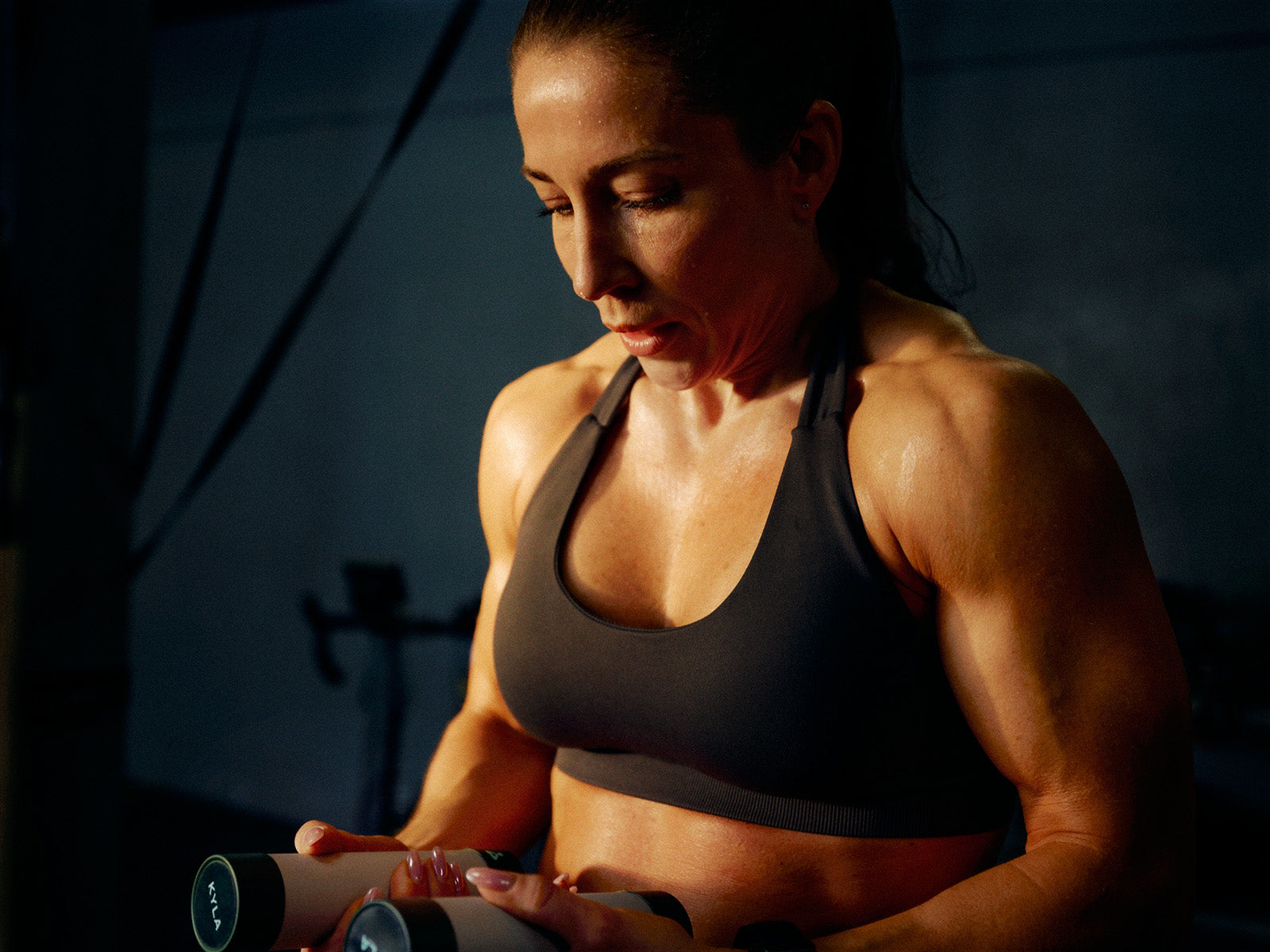
Pre-cooling before a race means lowering your body's heat before the effort begins, so you start with more headroom before heat limits you. The strategy is supported in sport science, most clearly by the Bongers 2014 meta-analysis on pre-cooling in the heat. A handheld palm-cooling tool fits the same slot as a cooling vest.
What is pre-cooling before a race?
Pre-cooling before a race is exactly what it sounds like. You lower your body's heat before the start, so that when the effort begins you have further to climb before heat starts limiting you. Think of it as starting the race with a cooler tank. Cooling vests, cold drinks, and cold water immersion have all been used this way. A handheld palm-cooling tool is a lighter, more targeted version of the same idea.
What does the science say?
This is one of the better-supported ideas in applied sport science. The clearest anchor is the meta-analysis by Bongers and colleagues, published in the British Journal of Sports Medicine in 2014, which pooled many studies on pre-cooling and exercise performance in the heat and found support for the strategy. Earlier work by Drust, Cable and Reilly in 2000 sits in the same line of research. What this body of work supports is the direction, that arriving cooler helps when heat is a factor. What it does not do is promise an identical result for every athlete and every condition, and the honest reading keeps those two things separate.
How does a palm-cooling tool fit next to a cooling vest?
A cooling vest lowers heat across a large surface and takes time and preparation to use. A palm-cooling tool works through one of the body's most efficient heat-release zones, the glabrous skin of the palm, which is built to exchange heat. That makes it targeted and quick, usable in the last minutes before a start without a cool box or a change of kit. KYLA Performance is a pair of handles engineered to work around 14 degrees C, the point where the vessels in the palm stay open and heat keeps moving. It fills the same pre-race slot as a vest, in a smaller and simpler form. You can see the tool itself on the product page and read how it works for the detail.
Does this apply outside endurance sport?
Yes, wherever heat is part of the problem. Endurance athletes meet heat over long durations. Drivers in motorsport sit in hot cockpits for extended periods with limited airflow. Any setting where a person has to perform while their core temperature is being pushed upward is a setting where starting cooler can help. The principle does not care about the sport. It cares about the heat.
What pre-cooling can and cannot do
Pre-cooling gives you headroom. It does not give you fitness, and it does not change the demands of the event. Starting cooler means heat takes longer to become your limiter, which matters most when the effort is long or the conditions are warm. The tool does not replace the work. It lets more of the work count.
Frequently asked questions
How is pre-cooling different from a warm-up?
A warm-up raises muscle temperature and readiness. Pre-cooling lowers core heat so you start with more margin before heat limits you. They work on different things and can be used together.
Is pre-cooling only useful in hot weather?
It matters most in the heat, which is where the research is strongest. In cool conditions the benefit is smaller, because heat is less likely to become your limiter in the first place.
Does colder pre-cooling work better?
Not necessarily. For palm cooling, going too cold makes the vessels in the palm constrict and slows heat transfer, which is why KYLA Performance is built to work around 14 degrees C rather than as cold as possible.
Can I use it right up to the start?
That is part of the point of a handheld tool. It is quick and targeted, so it fits the final minutes before a start in a way a full cooling vest or an ice bath does not.