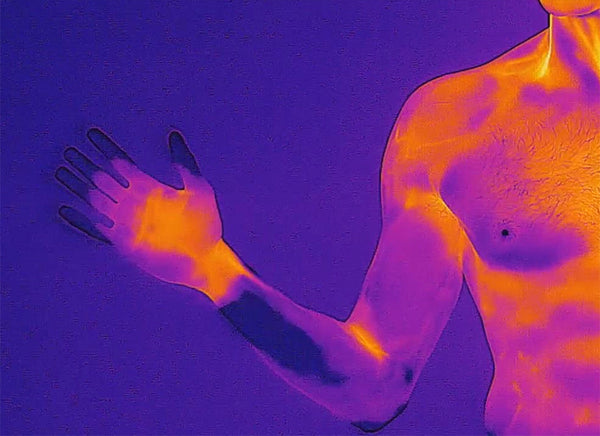


Palms and the face exchange heat more efficiently because they hold dense networks of blood vessels close to the skin, an anatomy built for heat transfer rather than insulation.
Most athletes think about cooling in general terms. Lower body temperature. Feel less hot. Recover faster.
But thermoregulation is not evenly distributed across the body. Certain regions are significantly more effective for heat exchange than others. This is particularly true for peripheral areas such as the palms, face, and soles of the feet.
The reason is physiological. These areas contain specialized vascular structures that allow large amounts of blood flow close to the skin surface, making heat transfer more efficient under the right conditions. In other words, some parts of the body are naturally designed for thermal exchange.
The body does not cool evenly
The human body continuously regulates temperature through multiple systems:
- Sweating
- Blood flow redistribution
- Radiation
- Convection
- Evaporation
But heat dissipation efficiency varies depending on anatomy and vascular structure. Large muscle groups generate substantial heat during exercise, yet they are not always the most efficient places to remove it. Heat still has to travel through the circulatory system before it can dissipate externally.
Peripheral regions behave differently. Areas like the palms and face contain dense vascular networks positioned relatively close to the skin surface. This allows warm blood to interact more directly with external temperature gradients. The process becomes especially relevant during repeated high-output activity, where thermal load accumulates progressively over time.
Why the palms matter
The palms contain specialized blood vessel structures known as arteriovenous anastomoses. These vascular pathways help regulate heat exchange by allowing increased blood flow near the skin surface when thermal strain rises.
From a thermoregulation perspective, this makes the hands unusually effective for heat transfer compared to many other body regions. This is one reason athletes instinctively seek cooling through the hands or face during hard efforts:
- Cold towels over the face
- Hands under cold water
- Touching cool surfaces
- Using airflow across exposed skin
The body naturally prioritizes areas where heat exchange becomes more efficient. Importantly, this does not mean palms are "magic" cooling zones. Thermoregulation remains a whole-body physiological process. But certain peripheral pathways can influence how efficiently heat moves out of circulation during recovery windows.
Heat accumulation affects performance before failure
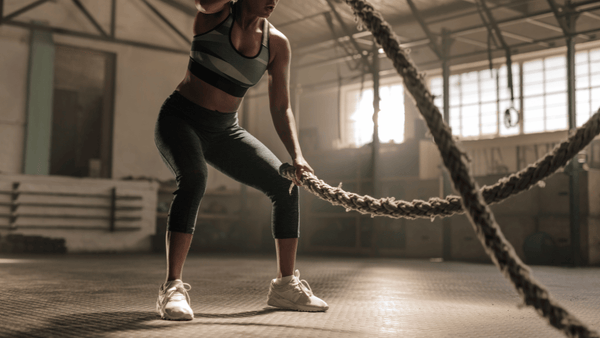
This becomes increasingly relevant in sports built around repeated efforts.
- HYROX
- CrossFit
- Combat sports
- Functional fitness
- Endurance intervals
- Repeated sprint environments
In these settings, athletes are rarely failing because of one isolated effort alone. Performance often fades progressively as thermal strain accumulates underneath the surface. The body does not fully reset between rounds or intervals. Cardiovascular strain remains elevated. Core temperature remains elevated. Recovery quality changes.
This broader relationship between heat accumulation and output is explored further in our article on why performance drops before you feel tired.
Cooling is about maintaining repeatability
One of the misconceptions around cooling is that it exists mainly for comfort. In performance environments, the larger question is often repeatability.
- Can output remain stable deeper into the session?
- Can recovery windows remain effective?
- Can the next interval feel similar to the previous one?
As thermal load rises, those answers begin changing. This is why thermoregulation matters even before athletes consciously feel overheated.
The nervous system continuously responds to rising physiological strain, including temperature. We explored this broader mechanism further in our article on why temperature shapes performance.
Why peripheral cooling matters during short rest periods
Short recovery windows are common in modern training. Thirty seconds. One minute. Ninety seconds. Quick station transitions. In these moments, the body is still carrying significant internal load from the previous effort. Heart rate remains elevated. Blood flow remains redistributed. Heat dissipation continues.
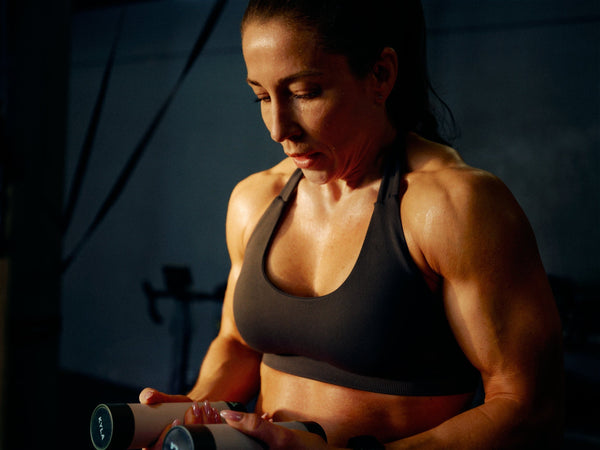
This creates a narrow window where thermal management may influence how the next effort feels and performs. That is part of the broader philosophy behind KYLA. The system is designed around the period between efforts, where repeated high-output work continues generating accumulating thermal strain across a session.
Not recovery after training, but performance during training.
Thermoregulation has always shaped human performance
Humans evolved around the ability to sustain effort under heat stress. Our thermoregulatory systems helped support endurance capacity long before modern sport existed. We explored this evolutionary perspective further in our article on why humans became endurance predators through heat regulation.
Millions of years later, athletes still operate inside the same physiological framework. Heat accumulates. The body responds. Performance changes.
The question is not whether temperature affects output. The question is how effectively the body manages thermal strain across repeated efforts.
What this means for athletes
Most athletes already understand effort. What is often underestimated is how much performance is shaped by thermoregulation during recovery windows. Peripheral regions like the palms and face are not important because they are separate from the body. They matter because they are deeply connected to how the body exchanges heat during repeated effort.
As training density increases and repeated-effort sports continue growing, these physiological details become increasingly relevant. Not as hacks. Not as gimmicks. But as part of understanding how performance is maintained over time.
Explore KYLA Performance™ to learn more about the system designed for performance between efforts.
Related articles: Heat Is Becoming a Safety Problem in Sport
References
Grahn DA, Cao VH, Heller HC. (2005), Heat extraction through the palm of one hand improves aerobic exercise endurance in a hot environment, Journal of Applied Physiology, 99(3), 972-978.
Taylor NAS et al. (2014), The role of human thermoregulatory mechanisms in exercise performance, Experimental Physiology, 99(1), 24-30.
Nybo L. (2008), Hyperthermia and fatigue, Journal of Applied Physiology, 104(3), 871-878.
Frequently asked questions
Why are the palms so good at releasing heat?
They are glabrous, or hairless, skin with a dense network of specialised blood vessels built for heat exchange. Blood arrives warm, sits close to the surface, and leaves cooler.
Which other areas exchange heat well?
The face and the soles of the feet share the same kind of vascular structure. These peripheral, hairless areas are the body's natural radiators.
Does cooling the palm cool the whole body?
It removes heat from the blood passing through, which returns to circulation cooler. It is targeted heat removal through an efficient route, not whole-body cold exposure.