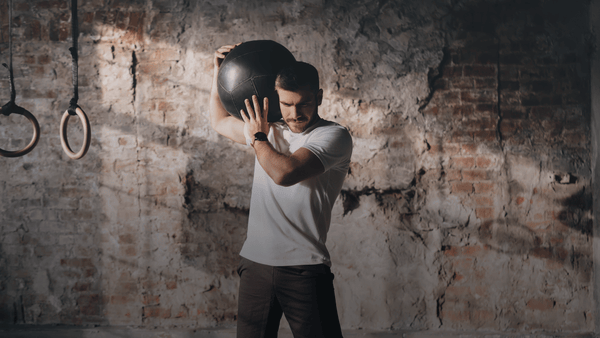

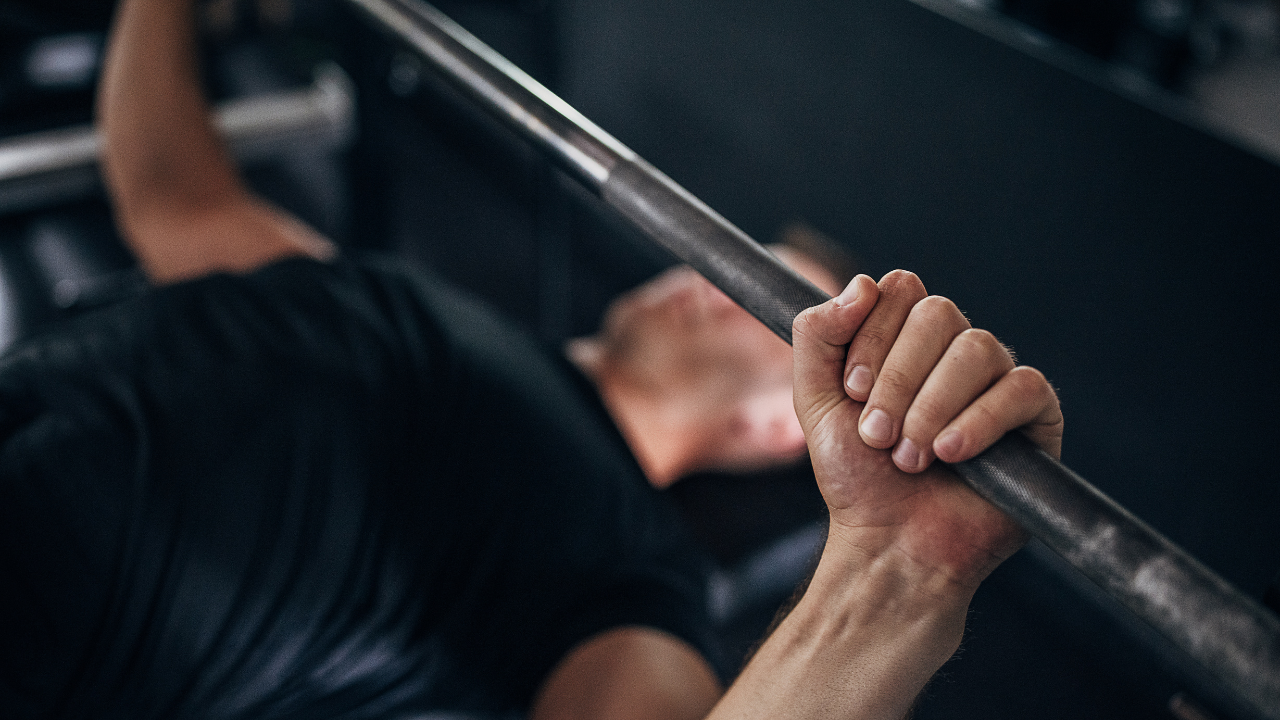
Your hands get hot when you train because the palms are one of the body's main heat release valves. They are not warming up on their own. They are carrying heat out of your core, and the fact that you can feel it means the system is working.
Most people read hot hands as a nuisance. Sweaty grip, slippery bar, chalk that stops working. It is worth reading it differently. The heat in your palms is a signal about your core, and it arrives before most of the signals you usually pay attention to.
Here is what is actually happening, and why it matters more in the fourth set than the first.
The heat is not made in your hands
Your hands are not doing much work. Even in a heavy pulling session, the muscles of the forearm and hand generate a small fraction of the heat your legs, back and chest produce.
So the heat you feel there did not start there. It arrived. Blood warmed by working muscle is routed to the surface, and the palms are one of the places the body sends it to get rid of it.
The vessels that make your palms different
The palms, the soles of the feet and parts of the face are covered in glabrous skin, meaning skin without hair. Under that skin sits a structure most of your body does not have: a dense network of arteriovenous anastomoses, short direct connections between small arteries and small veins.
Walløe (2016) puts the density at roughly 600 per square centimetre in the nail beds and around 100 per square centimetre in the palm. They bypass the fine capillary network entirely, which lets a large volume of blood reach the skin surface quickly.
They are also under active control. When you are cool they close, which is why your hands go cold first on a winter morning. When you are warm they open, and warm blood floods the surface. That is the switch you feel flipping in the middle of a session. More on why the palms move heat so efficiently.
Hot hands are a core temperature signal
This is the part worth internalising. Because those vessels open in response to being warm, hot palms are a reasonably early sign that your core has been climbing.
You will usually notice it before you notice anything else. Breathing is confounded by effort. Heart rate drifts for several reasons. Perceived exertion is subjective and arrives late. Hands that suddenly feel hot and swollen in the rest between efforts are a fairly clean read that your body has started spending capacity on cooling.
Why it gets worse across a session
Heat accumulates. Each hard effort adds more than the rest period removes, so across repeated efforts the baseline creeps up. That is why set four feels different from set one even when the load has not changed, and why the tenth interval is not the same as the second.
The cost is not only comfort. Cooling is work. Blood sent to the skin is blood not sent to working muscle, and the effort of shedding heat competes with the effort you actually came to make. We wrote about that in why you get weaker every set.
One honest caveat. How much this matters depends on how much heat the session produces. A hot interval session in July and a set of heavy singles in a cold gym are not the same thermal problem, and the hands will tell you which one you are in.
The valve works in both directions
If those vessels are the route heat leaves by, then the palm is also the place to intervene. This is the logic behind palm cooling: cool the surface the body is already using to dump heat, and you help it do the job faster.
With one important condition. Go too cold and the vessels constrict, the shunt closes, and less heat moves rather than more. This is why an ice pack is a poor tool for this, and why KYLA Performance is engineered to hold around 14°C rather than the coldest temperature it could reach.
What hot hands do not tell you
The signal is directional, not quantitative. Warm palms tell you the shunt is open. They do not tell you how high your core temperature is, how close you are to a limit, or whether the next set will be worse than the last.
Several other things open those vessels too. A warm room does it with no training at all. So does a hot drink, a hot shower, and simply being under-dressed for the ambient temperature. Some people run warm at rest and always have.
The reverse also holds. Cold hands in a hard session do not mean you are not heating up. Early in a session, or in a cold gym, the vessels can stay shut while core temperature climbs, which is why the sensation usually arrives some way into the work rather than at the start.
Used carefully it is still useful. Within one session, in one environment, the moment your palms change is a reasonable marker of when the thermal load became real. Compared across days, rooms and seasons, it is not a measurement.
Common questions
Is it normal for my hands to get hot when I train?
Yes. It is the expected response. The palms are one of the body's designated heat release zones, and warm hands mean those vessels have opened because your core temperature has risen.
Why do my hands swell as well as get hot?
The same mechanism. More blood is being routed to the surface of the hands, and increased blood volume in the periphery is what you feel as swelling. It usually settles within minutes of finishing.
Should I cool my hands during training?
If the session builds real heat and your output fades across repeated efforts, cooling the palms in the rest between them is a reasonable thing to try. The effect size is debated and depends on the method, the timing and how hot the session actually gets. We set out the evidence, including the studies that did not find a benefit, on our references page.
What this means for training
Hot hands are information, not a problem to be solved. They tell you the session has produced real heat and that your body has started spending capacity on getting rid of it. On a light day you may never notice it. On a hard day in a warm room you will notice it early, and that is the moment worth paying attention to.
The practical use is simple. Treat the point where your palms turn hot as the point where the rest between efforts starts to matter more than it did. Keep the rest honest rather than cutting it short, get the hands out of the heat if you can, and if you are going to cool them, cool them in the rest rather than during the effort. What we measured, and where the limits of that measurement sit, is set out on our methodology page.
The tool does not replace the work. It lets more of the work count.
References
Walløe, L. (2016). Arterio-venous anastomoses in the human skin and their role in temperature control. Temperature (Austin), 3(1), 92-103. PMID 27227081. doi:10.1080/23328940.2015.1088502
The wider evidence on palm cooling, including the studies that did not find a benefit, is listed on our references page.